(1) Terminal Blocks
Terminal blocks are primarily manufactured to facilitate easy wire connections. In practice, a terminal block consists of a metal strip enclosed in insulating plastic. Both ends of the metal strip feature holes for inserting wires, along with screws for tightening or loosening the connection. When it is necessary to connect two wires—or disconnect them—terminal blocks provide a convenient solution that allows quick disconnection without soldering or twisting wires together. There are many types of terminal blocks; common ones include plug-in terminal blocks, PCB terminal blocks, screw-type terminal blocks, and barrier-style terminal blocks.
Features of terminal blocks: various pin pitches, flexible wiring methods, suitable for high-density wiring requirements; maximum current rating up to 520 A; compatible with SMT manufacturing processes; withstand reflow soldering temperatures up to 300°C; and functionality can be extended using various accessories.
(2) Audio/Video Connectors
① 2-pin and 3-pin plugs and sockets: primarily used for signal transmission between devices. The input plug often serves as a microphone input. 2-pin connectors are mainly used for mono signal connections, while 3-pin connectors are typically used for stereo signal connections. They are categorized by diameter into three standard sizes: 2.5 mm, 3.5 mm, and 6.5 mm.
② RCA (Phono) connectors: commonly used in audio and video equipment for line-level input/output connections between devices.
③ XLR connectors: primarily used for connecting microphones to amplifiers.
④ 5-pin DIN sockets: mainly used for connecting cassette decks to amplifiers. They can consolidate both stereo input and output signals into a single connector.
⑤ RCA plugs: primarily used for signal transmission.
(3) Rectangular Connectors
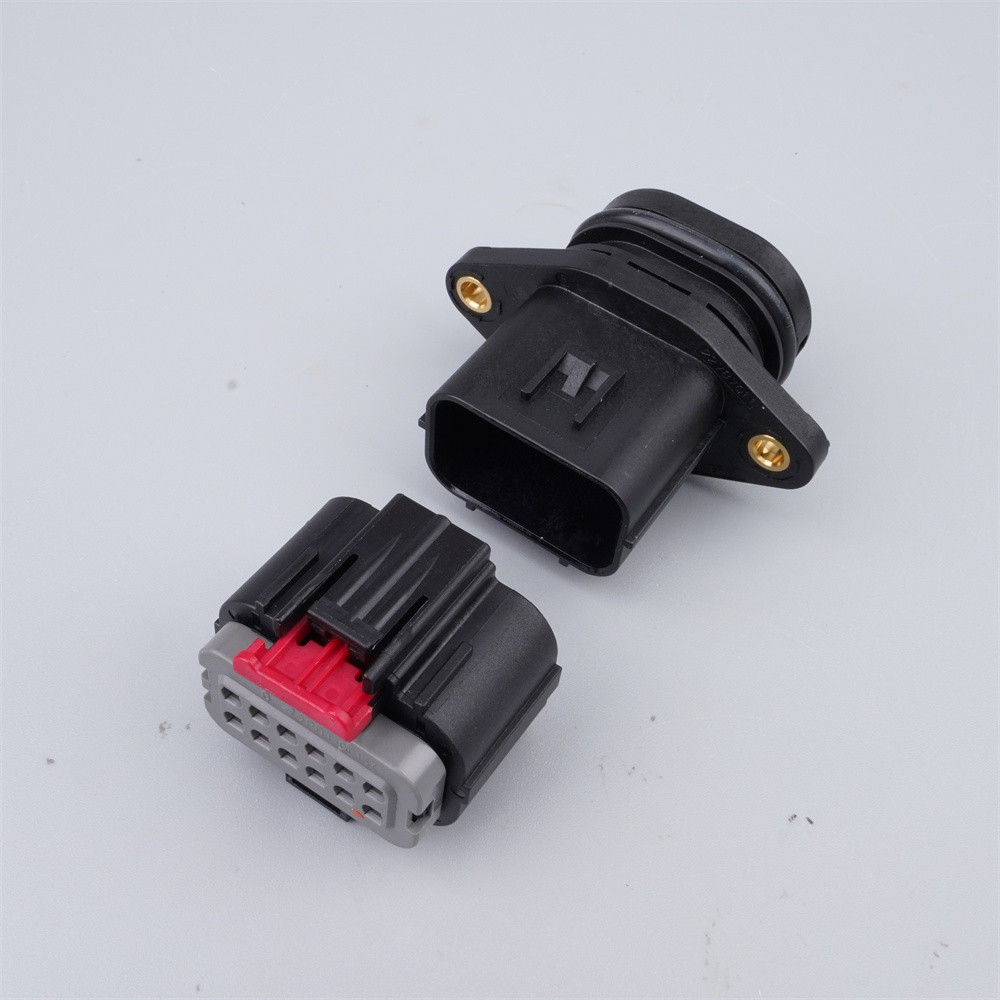
Rectangular connectors consist of multiple contact pairs housed within a rectangular plastic shell with excellent insulation properties. The number of contact pairs varies and can reach dozens. Contacts may be arranged in two, three, four, or more rows. Good electrical contact is ensured by the normal force and friction generated from the elastic deformation of each contact pair. To enhance performance, some contacts are plated with gold or silver.
Rectangular connectors can be classified as pin-type or hyperbolic spring-type; with or without an outer shell; and locking or non-locking types. These connectors are commonly used in low-frequency, low-voltage circuits, as well as mixed high- and low-frequency circuits, especially in radio communication instruments and test equipment.
(4) Circular Connectors
Circular connectors mainly fall into two categories: push-pull (plug-in) type and threaded (screw-type) connectors. Push-pull connectors are typically used in applications requiring frequent mating/unmating, with few contact points and currents below 1 A. Threaded connectors, commonly known as "aviation connectors," feature a standardized rotary locking mechanism. They offer convenient connection in multi-contact applications with high insertion/removal forces, excellent vibration resistance, and can easily meet special requirements such as waterproof sealing and electromagnetic shielding. They are suitable for high-current circuits where frequent plugging/unplugging is not required. These connectors range from 2 to nearly 100 contacts, with rated currents from 1 A up to several hundred amperes and operating voltages between 300 V and 500 V.
(5) PCB Connectors
Printed circuit board (PCB) connectors evolved from rectangular connectors and technically belong to that category, though they are often listed separately as a distinct type. They feature anywhere from one to dozens of contacts and can be used either with ribbon cables or directly mounted onto circuit boards. They are widely employed in computers to connect various expansion cards to the motherboard. To ensure reliable connections, contacts are typically gold-plated—commonly referred to as "gold fingers."
(6) Other Connectors
Other types of connectors include IC sockets, power plugs and sockets, fiber optic connectors, and ribbon cable connectors.
2025-10-09
返回上一页